
Millions of Nissan vehicles were equipped with defective Takata airbag inflators that can rupture during deployment and cause catastrophic injuries. Unlike normal airbag systems designed to cushion occupants during a crash, certain Takata inflators can violently explode. When this occurs, the metal inflator housing can fragment and send sharp metal pieces into the passenger compartment.
These incidents are often described as Takata airbag explosion injuries because the rupture behaves more like a small explosive event than a standard airbag deployment. Instead of inflating normally, the inflator housing can burst apart and propel metal fragments toward the driver or passenger at extremely high velocity.
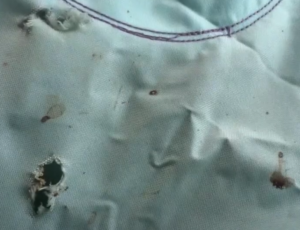
Metal Shrapnel Explosion Holes in Airbag
The nationwide Takata airbag recall eventually became the largest automotive safety recall in United States history. Numerous manufacturers were affected, including Nissan vehicles manufactured between the early 2000s and mid-2010s. These vehicles were equipped with inflators using ammonium nitrate propellant without a stabilizing drying agent, a design flaw that later proved dangerous in hot and humid environments.
Over time, prolonged exposure to heat and moisture can degrade the propellant and increase the risk that the inflator will rupture instead of deploying safely. When this occurs, the airbag system may transform from a protective safety device into a source of high-velocity metal fragments capable of causing devastating injuries.
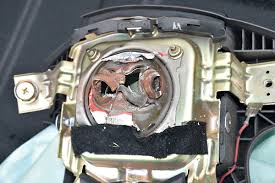
Takata Inflator Ruptured
Drivers and passengers injured in these incidents may have the right to pursue compensation through a Takata airbag injury lawsuit, particularly when the inflator rupture causes severe or life-altering injuries.
Nissan Vehicles Recalled for Exploding Takata Airbags
Several Nissan vehicles were included in nationwide recall campaigns involving defective Takata inflators capable of rupturing during airbag deployment. These inflators were later identified as presenting a serious safety hazard because the metal housing could explode and send fragments into the vehicle cabin.
Affected Nissan vehicles include:
- Nissan Altima – 2002–2016
- Nissan Sentra – 2002–2012
- Nissan Maxima – 2001–2016
- Nissan Pathfinder – 2001–2012
- Nissan Versa – 2007–2014
- Nissan Titan – 2004–2011
- Nissan Frontier – 2001–2011
- Nissan Murano – certain early model years
If a recalled inflator has not been replaced, deployment during a crash may result in a Takata airbag rupture injury rather than a normal airbag deployment. Instead of inflating safely, the inflator housing can fragment and propel metal debris toward the driver or passenger. Owners who are unsure whether their Nissan vehicle has received the recall repair should check the NHTSA VIN lookup tool to determine whether an open recall remains.
Nissan Altima Takata Airbag Recall (2002–2016)
The Nissan Altima Takata airbag recall affects millions of vehicles manufactured between approximately 2002 and 2016. During these years the Altima was one of Nissan’s best-selling sedans, and many were equipped with Takata inflators later identified as defective. Federal safety investigations linked several inflator designs to rupture incidents involving exploding airbags, including cases associated with the Nissan Altima Takata airbag injury lawsuit.
Because Altima vehicles frequently change ownership and remain on the road for many years, some may still contain original Takata inflators if recall repairs were never completed. When a defective inflator ruptures during deployment, the metal housing can explode and propel metal fragments toward the driver or passenger, striking the face, eyes, neck, or chest. Victims have reported catastrophic injuries including blindness and severe eye injuries, arterial injuries in the neck, penetrating facial wounds, severe eye trauma, and traumatic brain injury. Drivers or passengers injured in these events may have the right to pursue compensation through a Nissan Altima airbag injury lawsuit.
Nissan Altima Takata Inflator Defects (2002–2013)
Many 2002–2013 Nissan Altima vehicles were equipped with inflators using ammonium-nitrate propellant, which can degrade when exposed to heat and humidity. If the inflator over-pressurizes during deployment, the metal housing may rupture and send high-velocity metal fragments into the vehicle cabin, producing injuries associated with Takata inflator explosions.
Nissan Sentra Takata Airbag Recall (2002–2012)
Certain Nissan Sentra vehicles manufactured between 2002 and 2012 were also included in recall campaigns involving Takata inflators. These compact sedans were equipped with airbag modules that relied on ammonium nitrate propellant, a compound that can degrade over time when exposed to heat and humidity. As the propellant deteriorates, the inflator may burn too quickly when the airbag deploys. This can cause extreme pressure inside the inflator housing and potentially lead to a violent rupture.
When this occurs, occupants may suffer a Takata airbag rupture injury rather than a typical airbag deployment injury. Metal fragments can penetrate the vehicle cabin and cause severe trauma to the face, eyes, neck, or chest. Drivers and passengers injured in a Nissan Sentra inflator rupture may have the right to pursue a Takata airbag injury lawsuit if the defective inflator caused their injuries.
Nissan Maxima Takata Airbag Recall (2001–2016)
The Nissan Maxima was another high-volume vehicle affected by Takata inflator recalls. Vehicles manufactured between 2001 and 2016 may have been equipped with defective driver-side or passenger-side inflators.
The Maxima is commonly driven as a long-term personal vehicle, meaning older models frequently remain in service well beyond a decade. When recall repairs are not completed, the original inflator may remain installed for years. If a crash deployment occurs, the inflator may rupture and cause a Takata airbag shrapnel injury. The metal housing can break apart and send fragments toward occupants with devastating force.
Reported injuries in these incidents include deep facial lacerations, permanent vision loss, arterial damage in the neck, and traumatic brain injury resulting from penetrating metal fragments.
Nissan Pathfinder Takata Airbag Recall (2001–2012)
Nissan Pathfinder SUVs manufactured between 2001 and 2012 were also included in recall campaigns involving Takata inflators. SUVs frequently remain in service for many years, meaning older vehicles may still contain unrepaired airbags.
Because Pathfinder vehicles are often used for family transportation, a rupture event may expose multiple occupants to injury risk during a crash. If a defective inflator explodes, the metal housing may fragment and send shrapnel toward the driver or passenger. These incidents can result in severe metal shrapnel injuries, including penetrating trauma to the head, neck, and chest.
Nissan Titan and Frontier Takata Airbag Recall (2001–2011)
Nissan pickup trucks, including the Titan and Frontier, were also included in Takata inflator recall campaigns. Trucks from model years 2001 through 2011 may contain inflators that were later determined to pose a rupture risk. Pickup trucks are frequently used for commercial, fleet, or long-term personal service. These vehicles often pass through multiple owners through auctions, private sales, and rural transfers, increasing the likelihood that recall repairs were never completed.
If an unrepaired inflator deploys during a crash, the metal inflator housing can rupture and cause an exploding airbag injury. Metal fragments may penetrate the cabin and strike occupants in the face, neck, or chest. Drivers injured in these events may have the right to pursue compensation through a Takata airbag injury lawsuit.
Why Takata Airbags Can Explode
The defect responsible for many Takata inflator ruptures involves ammonium nitrate propellant used inside the airbag inflator. This chemical compound can become unstable over time, particularly in hot and humid climates. Without a drying agent to stabilize the compound, moisture exposure can cause the propellant to burn too rapidly when the airbag deploys. When this occurs:
- The inflator ignites to produce gas
- Pressure rapidly builds inside the inflator housing
- The metal housing may rupture
- Metal fragments are propelled into the passenger compartment
Drivers concerned about whether their vehicle still contains a defective inflator should use the NHTSA VIN lookup tool to check recall status. In some cases, regulators have also issued Takata do not drive warnings for vehicles considered especially dangerous due to high rupture risk. More information about the engineering failures behind these incidents can be found in our section explaining Takata airbag defects.
Common Injuries Linked to Nissan Takata Airbag Explosions
Unlike minor abrasions or burns typically associated with airbags, Takata inflator ruptures can produce catastrophic penetrating injuries caused by exploding metal components inside the vehicle cabin. Common injuries reported in Takata rupture incidents include:
- blindness and severe eye trauma
- deep facial lacerations and disfigurement
- neck artery injuries
- penetrating chest wounds
- traumatic brain injury
- metal shrapnel injuries
- wrongful death
Because these injuries result from defective product failure rather than simple crash force, victims may have the right to pursue compensation through a Takata airbag injury lawsuit.
What To Do If a Nissan Airbag Exploded
If a Nissan airbag deployed violently and caused injury, immediate action may help preserve critical evidence. Takata inflator rupture cases often depend on physical components and crash documentation that can be lost if the vehicle is salvaged or destroyed. Additional guidance is available on our page explaining what to do after airbag explosion incidents
Important steps include:
- Preserve the vehicle if possible
- Do not discard the airbag module or damaged components
- Photograph the interior and visible injuries
- Obtain crash reports and medical records
- Speak with an attorney experienced in Takata litigation
Speak With a Board-Certified Personal Injury Trial Lawyer
Takata airbag cases require investigation into engineering defects, recall history, and inflator design. These are not ordinary car accident cases. David P. Willis has been Board Certified in Personal Injury Trial Law since 1988, a distinction held by a small percentage of Texas attorneys. For more than four decades, his practice has focused on catastrophic injury and defective product litigation.
If you or a loved one suffered injuries due to an exploding Nissan airbag, you may have the right to pursue compensation through a Takata airbag injury lawsuit. Our firm handles these cases on a contingency fee basis, meaning you pay no attorney’s fees unless we recover compensation for you. We also offer a free case review to evaluate your potential claim.
Call 1-866-AIRBAGS to discuss your legal options today.